


Quick Answer
To define tourist and tourism, a tourist is a person who takes a temporary trip outside their usual environment and stays overnight at the destination. Tourism is the broader activity connected with visitors, including travel, accommodation, sightseeing, food, transportation, culture, and other experiences. A tourist is the person; tourism describes the wider travel activity and system.
Author Information
Author: Gulnaz Malik
Role: Founder, Publisher & Travel Content Specialist
Experience: 5+ years of experience in travel content, destination research, tourism insights, digital publishing, and practical trip planning.
Content Review: All content follows Google’s latest EEAT principles and uses information from recognized tourism and international authorities.
Last Updated: October 2026
Introduction
To define tourist and tourism properly, it helps to look beyond the simple idea of someone going on vacation. Tourism is a broad concept that includes people, destinations, services, experiences, and the activities that happen during a trip.
A tourist may visit another city for a holiday, explore historical sites, attend an event, take a cultural trip, or travel for business. Tourism covers the wider experience surrounding that visit.
Although these terms are closely related, they describe different aspects of travel and tourism.
Understanding the difference is useful for travelers, students, travel professionals, destination businesses, and anyone researching the tourism industry.
This guide explains the meaning of tourists and tourism, how they differ from visitors and travelers, the major types of tourism, why tourism matters, common misconceptions, and how travelers can make more responsible choices.
Table of Contents
- What Does Tourist and Tourism Mean?
- What Is a Tourist?
- What Is Tourism?
- Tourist vs. Visitor vs. Traveler
- What Is the Difference Between a Tourist and Tourism?
- What Are the Main Types of Tourism?
- Why Is Tourism Important?
- How Does Tourism Affect Destinations?
- What Makes a Good Tourist?
- Common Mistakes Tourists Make
- Best Practices for Responsible Tourism
- Troubleshooting Common Travel Problems
- Key Takeaways
- Frequently Asked Questions
- Conclusion
What Do Tourist and Tourism Mean?

When you define tourist and tourism, the most useful starting point is the relationship between the two terms.
A tourist is an individual who takes a temporary trip outside their usual environment and stays at the destination overnight.
Tourism is the broader activity associated with visitors and their trips. It includes what people do before, during, and as part of their travel experience.
UN Tourism describes tourism as a social, cultural, and economic phenomenon involving people traveling outside their usual environment for personal or business purposes. Its terminology also distinguishes tourists from same-day visitors.
For example, imagine a couple traveling from London to Istanbul for five nights. They stay in a hotel, visit museums, eat local food, use public transportation, and take a day trip.
The couple is tourists.
Their accommodation, transportation, sightseeing, dining, tours, and other visitor activities form part of tourism.
This simple difference makes the overall concept easier to understand.
What Is a Tourist?
A tourist is a visitor whose trip includes an overnight stay.
This definition is important because not everyone who visits another place is technically classified as a tourist. A person who visits a destination and returns home on the same day may instead be classified as a same-day visitor or excursionist.
A tourist can travel within their own country or across an international border. People may travel for many different reasons.
Common reasons include:
- Leisure and holidays
- Visiting family and friends
- Business
- Cultural experiences
- Religious travel
- Education
- Sports and events
- Wellness
- Adventure
- Nature experiences
For example, someone living in Lahore who spends three nights exploring Hunza can be a domestic tourist. Someone from Canada staying in Paris for a week can be an international tourist.
The purpose of the trip matters, but tourism is not limited to traditional sightseeing.
What Does a Tourist Actually Do?
A tourist can take part in many different activities during one trip.
They might:
- Visit museums and historical attractions
- Stay in a hotel or guesthouse
- Eat at local restaurants
- Use trains, buses, taxis, or rental cars
- Join guided tours
- Shop for local products
- Attend cultural events
- Visit beaches, mountains, parks, or other natural areas
- Take photographs
- Meet residents
- Participate in outdoor activities
A tourist does not need to follow a fixed itinerary. Some travelers prefer organized tours, while others create flexible plans.
Are All Tourists Vacationers?
No.
Vacationers are generally traveling for leisure, but tourists can travel for several other purposes.
For instance, a person staying three nights in another city for a conference may qualify as a tourist under tourism statistics. A traveler visiting a religious site or attending a cultural festival may also be part of tourism.
That is why the tourism industry is much broader than hotels and beach vacations.
What Is Tourism?
Tourism refers to the activities of visitors during tourism trips.
It includes much more than sightseeing. Transportation, accommodation, restaurants, attractions, entertainment, shopping, tours, and cultural experiences can all be connected to tourism.
Tourism also has an important economic and social dimension.
A destination may attract visitors because of its beaches, history, architecture, wildlife, food, festivals, mountains, shopping, or cultural heritage. Businesses then develop services that meet visitor needs.
These services can include:
- Hotels and resorts
- Guesthouses
- Airlines
- Railways
- Tour operators
- Travel agencies
- Restaurants
- Museums
- Theme parks
- Local guides
- Car rental companies
- Cultural attractions
UN Tourism identifies tourism as an important contributor to economic growth, employment, cultural heritage, and sustainable development when it is managed responsibly.
Tourism Is More Than Sightseeing
One common misunderstanding is that tourism only means visiting famous attractions.
In reality, tourism can involve ordinary experiences.
A visitor might take a cooking class, stay with a local host, attend a football match, explore a neighborhood market, or travel to a rural community.
These experiences can be just as important to the visitor as major landmarks.
That wider perspective also explains why tourism affects so many different industries.
Tourist vs. Visitor vs. Traveler
The words tourist, visitor, and traveler are often used as if they mean the same thing. However, tourism terminology gives them different meanings.
| Term | Simple meaning | Example |
| Traveler | Anyone moving between places | A person traveling by train |
| Visitor | A person traveling to a place beyond their normal surroundings | Someone visiting another city |
| Tourist | A visitor whose trip includes an overnight stay | A traveler spending three nights at a hotel |
| Excursionist | A visitor who does not stay overnight | Someone taking a day trip |
UN Tourism defines a visitor as a traveler taking a trip outside their usual environment for less than a year, provided the purpose is not employment by a resident entity at the destination. A tourist is a visitor whose trip includes an overnight stay.
This difference is particularly helpful when understanding tourism statistics.
For everyday conversation, however, people often use “traveler” and “tourist” more loosely.
What Is the Difference Between a Tourist and Tourism?
The simplest way to define tourist and tourism is to remember that one term describes a person and the other describes a broader activity.
A tourist is the individual taking the trip.
Tourism covers the activities, services, experiences, and economic exchanges connected to visitors.
| Tourist | Tourism |
| A person | A broader activity and sector |
| Takes a temporary trip | Includes visitor activities and services |
| May travel domestically or internationally | Can involve domestic and international travel |
| Experiences a destination | Connects travelers with destinations and services |
| May spend money on travel products | Includes industries serving visitors |
Consider a family traveling to Rome.
The family members are tourists. Their hotel stay, airport transfer, restaurant meals, museum visits, guided tours, and local transportation all contribute to the overall travel experience.
The distinction is simple:
Tourist = someone who travels.
Tourism = the wider activity surrounding that travel.
What Are the Main Types of Tourism?

Tourism comes in many forms because people travel for a variety of purposes.
Some trips focus on relaxation. Others center on culture, nature, business, adventure, or personal interests.
Leisure Tourism
Leisure tourism involves traveling primarily for relaxation, recreation, entertainment, or sightseeing.
Beach vacations, city breaks, resort holidays, and weekend escapes are common examples.
Travelers planning leisure trips can also explore Tripzunos guides such as best weekend trip ideas for inspiration.
Cultural Tourism
Cultural tourism focuses on learning about the heritage, traditions, art, architecture, food, and lifestyle of a destination.
A traveler visiting Türkiye to explore historic mosques, ancient ruins, traditional markets, and local cuisine may be participating in cultural tourism.
Cultural tourism encourages travelers to learn about a destination instead of simply taking photos of it.UN Tourism also recognizes cultural tourism as a way to connect visitors with tangible and intangible cultural heritage.
Adventure Tourism
Adventure tourism involves activities that may provide physical challenges, excitement, or outdoor experiences.
Examples of adventure tourism activities include:
- Hiking and trekking
- White-water rafting
- Skiing and snow activities
- Scuba diving
- Mountain climbing
- Zip-lining
- Wildlife exploration
Travelers should choose activities that match their experience and follow local safety requirements.
Business Tourism
Business tourism includes temporary travel for professional purposes.
Examples include conferences, meetings, exhibitions, trade shows, training programs, and corporate events.
Business travelers may still use hotels, restaurants, local transportation, attractions, and other tourism services.
Family Tourism
Family tourism involves travel planned to meet the needs, comfort, and interests of everyone in the family.
Families often prioritize:
- Convenient accommodation
- Child-friendly activities
- Safe transportation
- Flexible schedules
- Easy access to food and facilities
- Attractions suitable for different ages
A successful family trip does not need a packed schedule. Leaving time for rest can make the experience much more enjoyable.
Solo Tourism
Solo tourism involves traveling independently.
With this style of travel, people can enjoy flexible schedules and choose activities based on their personal interests.
However, independent travelers should research local customs, transportation, emergency contacts, accommodation locations, and entry requirements before departure.
Nature and Ecotourism
Nature tourism focuses on natural environments such as mountains, forests, coastlines, deserts, lakes, and wildlife areas.
Ecotourism adds an important responsibility: protecting the environment and supporting local communities.
Travelers can help by following park rules, avoiding litter, respecting wildlife, and choosing responsible local operators.
Why Is Tourism Important?
Tourism matters because it connects people with destinations while supporting a large network of businesses and workers.
Hotels, restaurants, transportation companies, attractions, tour operators, guides, retailers, and entertainment businesses can all benefit from visitor spending.
Tourism can also create employment and encourage investment in infrastructure.
The United Nations describes tourism as an important economic sector that can support employment, livelihoods, cultural exchange, and sustainable development.
Economic Benefits
Visitors spend money on many parts of a destination.
Their spending can support:
- Accommodation
- Food and restaurants
- Transportation
- Attractions
- Local guides
- Shops
- Entertainment
- Cultural activities
This spending can circulate through local communities.
Cultural Benefits
Tourism can encourage people to learn about cultures different from their own.
When managed responsibly, tourism can also help support museums, historic sites, traditional crafts, festivals, and other forms of cultural heritage.
However, cultural experiences should be respectful. Traditions should not be treated simply as entertainment.
Environmental Opportunities
Tourism can create financial reasons to protect natural attractions.
National parks, wildlife areas, and protected landscapes may depend partly on visitor fees and tourism-related funding.
At the same time, poorly managed tourism can damage those same places. Sustainable planning is therefore essential.
How Does Tourism Affect Destinations?
Tourism can bring major opportunities, but it can also create challenges.
A balanced approach is important.
| Potential Benefits | Potential Challenges |
| Local employment | Crowding |
| Business revenue | Waste |
| Cultural exchange | Pressure on resources |
| Heritage preservation | Damage to sensitive sites |
| Infrastructure investment | Traffic |
| Support for local products | Rising local costs in some areas |
The effects of tourism largely depend on how carefully it is planned and managed.
A destination with good transportation, visitor management, environmental rules, and community involvement can handle tourism more effectively than a destination experiencing uncontrolled growth.
What Makes a Good Tourist?
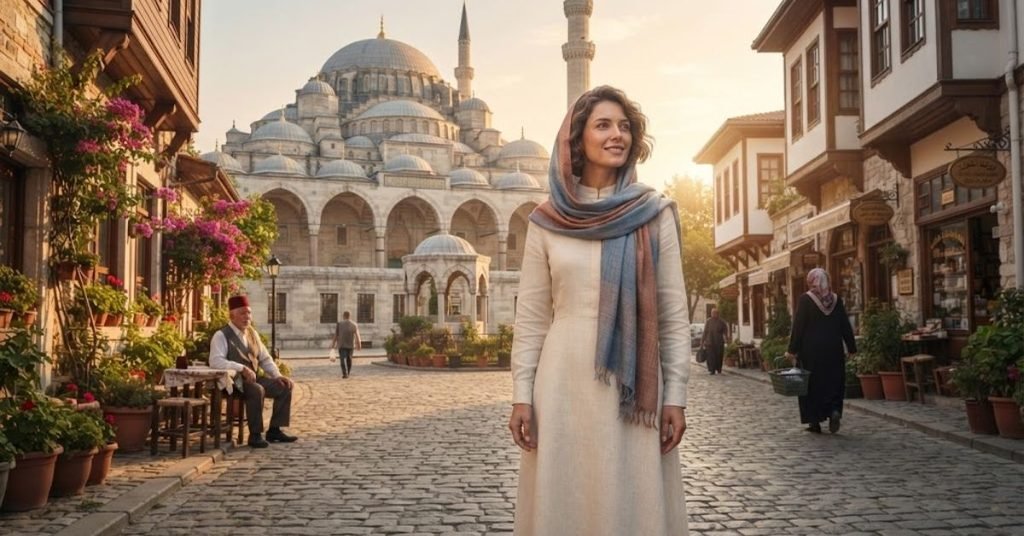
A good tourist does more than visit attractions.
They also consider how their actions affect residents, culture, and the environment.
Good habits include:
- Respecting local customs
- Following local laws
- Asking before photographing people
- Keeping noise reasonable
- Avoiding litter
- Supporting local businesses
- Protecting natural areas
- Learning basic cultural etiquette
- Following rules at religious and historical sites
For international trips, travelers should also check current entry requirements and official travel information before departure.
For example, Pakistan’s official tourism portal provides information about the country’s destinations and tourism resources for visitors.
Common Mistakes Tourists Make
Even experienced travelers can make mistakes when visiting unfamiliar destinations.
Trying to See Everything
Packing too many destinations into one trip can turn a vacation into a stressful checklist.
Choose fewer places and allow enough time to experience them properly.
Ignoring Local Customs
Visitors sometimes assume that habits acceptable at home are acceptable everywhere.
Before traveling, research appropriate clothing, photography rules, tipping customs, religious etiquette, and public behavior.
Choosing the Cheapest Option Automatically
The cheapest hotel, transfer, or tour is not always the best value.
Check location, cancellation conditions, transportation access, and recent official information before booking.
Leaving No Flexibility
A completely packed itinerary can become difficult when transportation is delayed or weather changes.
Keep some flexible time in your schedule.
Forgetting Travel Documents
Keep passports, visas, reservations, insurance details, and other essential documents accessible.
Keeping digital copies can also serve as a helpful backup.
Best Practices for Responsible Tourism
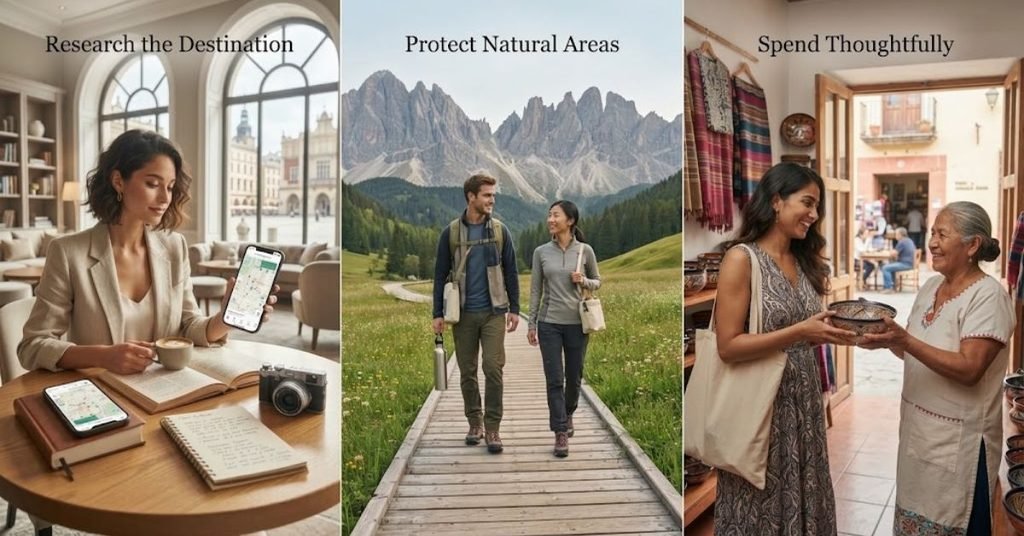
Responsible travel starts before the trip.
Research the Destination
Learn about local laws, culture, weather, transportation, and important travel requirements.
Choose Local Businesses
Whenever practical, eat at locally owned restaurants, buy locally made products, and use reputable local guides.
Protect Natural Areas
Stick to designated trails, respect wildlife guidelines, and always take your rubbish with you.
Respect Communities
Keep in mind that busy tourist destinations are also communities where locals live and work.
Avoid excessive noise and respect private property.
Spend Thoughtfully
Travel spending can benefit local communities more when visitors support independent businesses and choose genuine local experiences.
Troubleshooting Common Travel Problems
Travel does not always go according to plan.
Here are practical ways to handle common problems.
| Problem | Practical response |
| Transport delay | Check official updates and keep important contacts available |
| Lost luggage | Report it immediately and keep baggage information |
| Booking problem | Save confirmation emails and contact the provider |
| Bad weather | Keep flexible activities as backup options |
| Language barrier | Use translation tools and learn basic local phrases |
| Unexpected cost | Keep an emergency travel budget |
| Entry issue | Verify requirements through the relevant official authority before departure |
If a problem involves visas, immigration, or entry requirements, do not rely on old travel advice. Requirements can change, so travelers should check the relevant government or official authority before departure.
Key Takeaways
- A tourist is a visitor whose trip includes an overnight stay.
- Tourism refers to the activities of visitors and the wider travel experience.
- Travelers can participate in leisure, cultural, business, family, adventure, nature, and other forms of tourism.
- Domestic travelers can also be tourists.
- Same-day visitors are generally classified differently from overnight tourists.
- Tourism can support employment, businesses, communities, and cultural heritage.
- Poorly managed tourism can create environmental and social pressure.
- Responsible travelers should respect local communities, culture, laws, and natural areas.
- Always check the latest travel requirements before taking an important trip.
Frequently Asked Questions
What is the simplest way to define tourist and tourism?
A tourist is a person who temporarily visits another destination and stays overnight. Tourism is the wider activity connected with visitors, their trips, experiences, and related services.
How is a tourist different from a traveler?
A traveler is a broad term for someone moving between places. A tourist is a visitor taking a temporary trip that includes an overnight stay.
Can a domestic traveler be a tourist?
Yes. A person can be a tourist while traveling within their own country if the trip takes them outside their usual environment and includes an overnight stay.
Is tourism only about vacations?
No. Tourism can include leisure, business, culture, religion, education, nature, adventure, wellness, and other temporary travel purposes.
What are the main types of tourism?
Common types include leisure, cultural, business, family, solo, adventure, nature, ecotourism, wellness, and religious tourism.
Why is tourism important?
Tourism can support businesses, create jobs, promote cultural exchange, improve infrastructure, and strengthen local economies. Its positive impact depends on careful planning and responsible management.
Is a day trip considered tourism?
A day trip can be part of tourism, but the person is generally classified as a same-day visitor or excursionist rather than an overnight tourist.
How can tourists travel responsibly?
Travelers can respect local customs, support local businesses, protect natural areas, reduce waste, follow local rules, and treat residents and cultural sites respectfully.
Conclusion
Knowing how to define tourist and tourism gives travelers a clearer understanding of what happens when people move between destinations.
A tourist is someone who takes a temporary trip away from their usual surroundings.
Tourism is the much broader network of activities and experiences connected with that visit. It includes accommodation, transportation, food, attractions, culture, entertainment, business travel, and many other services.
The concept also goes beyond vacations. A family exploring another city, a solo traveler hiking in the mountains, a visitor attending a conference, and someone exploring a country’s cultural heritage can all participate in tourism.
For travelers, the most useful lesson is simple: travel with curiosity, preparation, and respect.
Before your next trip, research the destination, check current official requirements, understand local customs, and leave room for flexibility. These small steps can make travel easier while helping destinations remain welcoming for future visitors.
After-Article SEO Items
10 SEO Tags
- define tourist and tourism
- tourist definition
- tourism definition
- types of tourism
- what is a tourist
- what is tourism
- tourist vs traveler
- tourism meaning
- responsible tourism
- travel and tourism
Internal Links
These are based on the Tripzunos pages you have previously provided as published article URLs, excluding the two URLs your prompt specifically prohibited.
| Anchor Text | Suggested Tripzunos Page |
| where to travel in summer | https://tripzunos.com/where-to-travel-in-summer/ |
| inexpensive family vacation ideas | https://tripzunos.com/inexpensive-family-vacation-ideas/ |
| most beautiful places on Earth | https://tripzunos.com/most-beautiful-places-earth/ |
| Punta Cana vacation packages guide | https://tripzunos.com/punta-cana-vacation-packages-guide/ |
| romantic trips for couples | https://tripzunos.com/romantic-trips-for-couples/ |
2 Authoritative External References
Social Media Title
Define Tourist and Tourism: The Simple Guide to Understanding Travel


